
10 Powerful Ways to Use ChatGPT for SEO Key Takeaways
Using ChatGPT for SEO is no longer a futuristic experiment — it is a practical way to speed up research, automate repetitive tasks, and produce content that ranks.
- ChatGPT for SEO can replace hours of manual keyword research with structured, intent-based lists in seconds.
- Successful ChatGPT SEO strategies rely on clear prompts, human editing, and integration with traditional SEO tools like Ahrefs.
- From competitor analysis to on-page optimization, these approaches reduce busywork and free you to focus on strategy and content quality.
What Makes ChatGPT a Game-Changer for SEO Workflows
Search engine optimization has always demanded a mix of creativity, data analysis, and tedious manual checks. AI SEO tools like ChatGPT change that equation by handling the repetitive parts. Instead of scrolling through hundreds of keyword suggestions, you can ask ChatGPT to group them by intent. Instead of writing meta descriptions one by one, you can generate a batch in a minute. The key is knowing which tasks to delegate and how to prompt effectively.

Many people worry that AI content gets penalized. That is a valid concern. But when you use SEO optimization with ChatGPT as a research assistant or a first draft engine — and then edit thoroughly — you get the best of both worlds. Speed and quality do not have to be opposites.
1. Supercharge Keyword Discovery and Clustering
Traditional ChatGPT keyword research starts with a seed term. You ask ChatGPT to generate long-tail variations, related questions, and semantically linked phrases. Then you take that list and verify it with a dedicated SEO tool. This hybrid approach saves hours of brainstorming time.
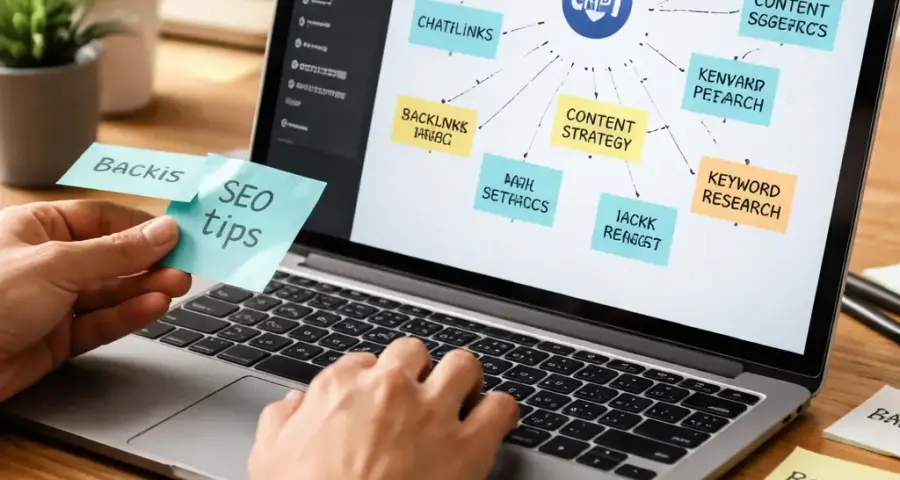
How to Run Keyword Research with ChatGPT
Start with a prompt like: “Generate 30 long-tail keyword ideas for [your topic] grouped by search intent — informational, commercial, transactional.” The model will produce a structured table you can export. Then cross-check search volumes using a platform like Ahrefs or Semrush. This method is especially useful for AI keyword clustering, where you organize terms by topic rather than scattering them across posts.

Handling the “Accuracy” Objection
Critics argue ChatGPT invents data. True — it cannot give you real search volume or difficulty scores. But it excels at uncovering phrase variations that tools miss. Use ChatGPT for ideation and clustering, and use dedicated smart SEO tools with AI for the numbers.
2. Analyze Competitors at Speed
ChatGPT competitor analysis works best when you feed it structured data. Copy the meta titles and descriptions from your top three competitors’ ranking pages. Paste them into ChatGPT and ask: “Analyze these title patterns. What keyword themes do they target? What gaps do you see?”
This process reveals content opportunities and common structures. You can also paste a competitor’s about page or blog intro and ask ChatGPT to summarize their tone and value proposition. For digital marketers, this kind of AI-driven SEO research turns a manual weekend task into a 15-minute routine.
3. Generate On-Page SEO Elements in Bulk
ChatGPT on-page SEO is one of the most direct applications. You can generate title tags, meta descriptions, header outlines, and image alt text for an entire content cluster in a single session.
Prompt Example for On-Page Optimization
“Write five meta descriptions for blog posts about sustainable gardening. Each description must include a primary keyword, stay under 160 characters, and include a call to action.” The output gives you a solid first draft. Adjust tone and add branding before publishing. This workflow exemplifies SEO content creation with AI without sacrificing human oversight.
4. Create Content Briefs That Actually Guide Writers
Every great post starts with a brief. Instead of writing briefs from scratch, use ChatGPT content optimization to build them. Ask ChatGPT to outline a 2000-word article based on a target keyword, including H2 and H3 headings, key points to cover, related questions, and internal linking suggestions.
This practice is especially helpful for AI blogging tools used by content teams. A well-structured brief reduces revisions and keeps the SEO strategy consistent. Freelance writers appreciate clarity, and ChatGPT delivers it fast.
5. Automate SERP Feature Analysis
ChatGPT SERP analysis involves examining search result pages to understand what Google rewards. Paste the top five results for a query into ChatGPT and ask: “What format do most results use? Do they include lists, images, videos, or data? What is the average word count?”
This gives you a blueprint for your own content. If every ranking page has a “Best X for Y” table, your post should too. If people also ask boxes dominate, include clear FAQ sections. This is one of the most practical AI tools for digital marketers to align content with user intent.
6. Write and Optimize Affiliate Content
ChatGPT for affiliate marketing can streamline product roundups, comparison tables, and review drafts. Start by listing product features. Ask ChatGPT to write a comparison paragraph that highlights differences and includes the affiliate link context naturally.
The trick is to avoid generic sales language. Specify your audience in the prompt. For example: “Write a 300-word comparison of [Product A] vs [Product B] for beginner photographers on a budget. Keep the tone helpful, not pushy.” This approach works well for ChatGPT for niche websites where trust matters more than hype.
7. Build Backlink Outreach Sequences
ChatGPT backlink strategies often start with prospecting. But outreach emails are where many campaigns fail. Use ChatGPT to draft personalized email templates that mention the recipient’s content by name. For instance: “Write a cold email template for a broken link outreach campaign. The target site has a resource page about email marketing. Our content is a guide to email automation tools.”
Personalization is critical. The AI can suggest subject lines, tone variations, and follow-up messages. This is a low-effort way to implement search engine optimization with AI in your link building routine.
8. Streamline Technical SEO Audits
Technical SEO with ChatGPT helps you interpret crawl reports and prioritize fixes. Paste a list of 404 errors or redirect chains from your SEO tool. Ask ChatGPT: “Group these issues by severity. Suggest a fix order starting with the ones that affect user experience most.”
You can also ask for plain-English explanations of technical terms like canonical tags or structured data. This is especially valuable for beginners who feel overwhelmed by SEO optimization with ChatGPT in the technical domain. The AI translates geek-speak into actionable steps.
9. Automate Reporting and Progress Tracking
SEO workflow automation is not just about content. You can use ChatGPT to draft weekly or monthly performance summaries. Feed it data from Google Search Console or an analytics dashboard. Ask: “Summarize organic traffic changes, top-performing pages, and keyword movements. Highlight three action items.”
This saves hours of report writing. Marketers and agencies can then spend that time on strategy. Combined with SEO productivity tools, ChatGPT becomes a central part of your reporting toolkit.
10. Brainstorm and Validate Content Ideas
AI-powered SEO content needs a solid idea pipeline. Use ChatGPT to generate 20 blog post ideas based on a core topic and your target audience’s pain points. Then refine them by asking: “Which of these ideas has the highest click potential for [keyword]?”
The real value comes from iteration. You can probe deeper — “Expand idea #3 into a detailed outline” — and quickly test angles. This is how ChatGPT for bloggers turns a blank page into a content calendar in minutes.
SEO Entities and Their Functions
Understanding how search engines evaluate pages helps you use ChatGPT more effectively. Below are key entities you will encounter during ChatGPT SEO strategies and how they influence decisions.
- Root domain / Subdomain / URL-level analysis — Identifies whether performance comes from the whole site or a specific section like blog.example.com.
- Organic keywords and Keyword Difficulty (KD) — Shows demand and competition for specific terms. Useful when validating ChatGPT-generated keyword lists.
- Referring domains and Dofollow/Nofollow links — Indicates link quality. Helps prioritize outreach targets in ChatGPT backlink strategies.
- Top pages by traffic — Reveals which URLs already earn visibility. Use ChatGPT to optimize those further.
- Featured snippets and People Also Ask — Show what answer format Google rewards. Guide your content structure.
- Crawl issues and Core Web Vitals — Technical health indicators. ChatGPT helps translate these into plain-language fix lists.
Useful Resources
For AI SEO tools and data verification, check out Ahrefs’ official SEO tools guide. For deeper technical SEO with ChatGPT workflows, refer to Moz’s practical ChatGPT for SEO tips.
Frequently Asked Questions About 10 Powerful Ways to Use ChatGPT for SEO
How can ChatGPT help with SEO?
ChatGPT helps by generating keyword ideas, drafting meta tags, creating content briefs, analyzing competitors, and automating repetitive SEO tasks like reporting and outreach. It is a productivity multiplier for any SEO workflow.
Is ChatGPT good for keyword research?
Yes, for ideation and clustering. ChatGPT produces long-tail variations and intent-based groupings quickly. However, you should verify search volume and difficulty using a dedicated SEO platform.
Can ChatGPT improve website rankings?
Indirectly, yes. By streamlining content creation, on-page optimization, and technical audit interpretation, ChatGPT helps you implement SEO best practices faster, which can positively impact rankings.
How do marketers use ChatGPT for SEO ?
Marketers use it for keyword clustering, generating meta descriptions, writing outreach emails, summarizing analytics, and creating content outlines. It reduces time spent on routine tasks.
What are the best ChatGPT SEO strategies ?
The top strategies include combining ChatGPT with an SEO tool for keyword research, using it for competitor content analysis, automating on-page optimization, and creating data-informed content briefs.
Can ChatGPT automate SEO tasks?
Yes, to a large extent. Tasks like meta description generation, report drafting, and content outline creation can be fully automated with proper prompts, saving hours each week.
How does ChatGPT support content optimization?
By analyzing top-ranking content, suggesting keyword placements, generating related questions for inclusion, and proposing internal link opportunities that strengthen topical relevance.
Can beginners use ChatGPT for SEO ?
Absolutely. Beginners find it helpful for learning SEO terminology, generating first drafts, and understanding search intent. The low learning curve makes it accessible to anyone.
What are smart ways to use ChatGPT for blogging?
Smart uses include brainstorming blog topics, creating detailed outlines, rewriting drafts for clarity, and generating social media snippets to promote each post.
Does ChatGPT help with backlinks?
Yes, primarily through outreach email drafting and prospecting list preparation. ChatGPT can also help you identify unlinked brand mentions by analyzing provided text snippets.
How can AI improve website traffic?
AI helps you produce more targeted content faster, optimize for featured snippets, and identify content gaps that attract search traffic. It increases the volume of quality optimization work.
What are the best AI tools for SEO?
ChatGPT leads for content and research tasks. It pairs well with Ahrefs, Semrush, and Surfer SEO for data validation and advanced optimization metrics.
Can ChatGPT optimize blog posts?
Yes. It can rewrite sections for keyword density, add transition sentences, improve readability, and suggest better headings — all based on your provided target keyword.
Why are SEO experts using ChatGPT?
Because it reduces manual overhead. Experts use it to scale content research, generate structured data outlines, and draft technical documentation faster than traditional methods.
Can ChatGPT help affiliate marketers?
Definitely. Affiliate marketers use it to write product comparisons, create roundup posts, draft email sequences, and optimize landing page copy for specific search queries.
What are the benefits of AI in SEO?
Key benefits include faster task execution, reduced manual research time, ability to analyze large text datasets, and consistent application of SEO best practices across many pages.
How does AI improve search engine optimization?
AI improves SEO by enabling faster keyword clustering, more frequent content refreshes, improved coverage of related topics, and quicker interpretation of technical SEO reports.
Can ChatGPT generate SEO content ideas?
Yes. By providing a seed topic and target audience, ChatGPT can produce dozens of content ideas with suggested angles, formats, and primary keywords in seconds.
What industries use ChatGPT for SEO ?
E-commerce, SaaS, affiliate marketing, local businesses, publishing, and education all leverage ChatGPT for SEO tasks ranging from product descriptions to academic content optimization.
What makes ChatGPT different from other AI SEO tools ?
ChatGPT is general-purpose and conversational, allowing flexible interactions. Other tools are often specialized for one function, whereas ChatGPT handles writing, analysis, strategy brainstorming, and data interpretation in one chat.